
 Persian (فارسی)
  English
  Español
  Русский
  Turkish
  Arabic (العربية)
  简体中文 (中国)
An INTERPOL Red Notice, Diffusion, or other entry in INTERPOL’s systems can create serious legal and practical consequences. A person may face detention during travel, secondary inspection at borders, immigration complications, banking issues, reputational harm, and difficulty conducting international business.

The Office of Foreign Assets Control, commonly known as OFAC, is the primary agency within the U.S. Department of the Treasury responsible for administering and enforcing U.S. economic and trade sanctions. OFAC sanctions affect a wide range of transactions, including banking, wire transfers, investments, imports and exports, professional services, technology services, shipping, insurance, real estate, securities, cryptocurrency, and cross-border payments.

The U.S. Securities and Exchange Commission, commonly known as the SEC, operates a whistleblower program that allows individuals to report possible violations of federal securities laws. The program is especially important in cases involving securities fraud, insider trading, false investor disclosures, accounting misconduct, unregistered securities offerings, Ponzi schemes, and market manipulation.

U.S. sanctions involving Venezuela remain complex, highly fact-specific, and subject to frequent change. Although the Office of Foreign Assets Control (“OFAC”) has issued a number of Venezuela-related General Licenses, those authorizations are not a complete lifting of sanctions.

An INTERPOL preemptive request is an important legal strategy for individuals who believe that a foreign government may attempt to misuse INTERPOL channels against them. This risk commonly arises when a person is facing a politically motivated criminal case, an abusive prosecution, a business-related criminal complaint, or a foreign arrest warrant that may later become the basis for an INTERPOL Red Notice or diffusion.

INTERPOL Red Notices and diffusions can create serious U.S. immigration consequences even when the person has never been convicted of a crime. A Red Notice is not an international arrest warrant; INTERPOL describes it as a request to law enforcement worldwide to locate and provisionally arrest a person pending extradition, surrender, or similar legal action, while each country decides under its own law whether to arrest the person.

Semiconductors are among the most strategically sensitive products in global trade. In 2026, exporting semiconductors is no longer a routine commercial matter: it is a legal, geopolitical, and compliance issue involving export controls, sanctions, end-user restrictions, re-export rules, customs scrutiny, and supply-chain enforcement risk.
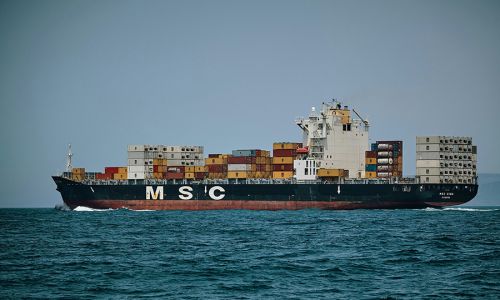
Weapons re-export has become one of the most aggressively scrutinized areas of global trade compliance. In 2026, regulators are no longer focused only on the original exporter. They are increasingly targeting distributors, resellers, freight intermediaries, affiliates, and foreign companies that move defense-related goods from one country to another.

For many individuals, the first sign of an INTERPOL issue is not a formal notification. It may appear as an airport detention, denied visa application, frozen bank account, enhanced compliance review, reputational inquiry, or unexpected questioning by authorities. By that point, the matter can already be urgent.